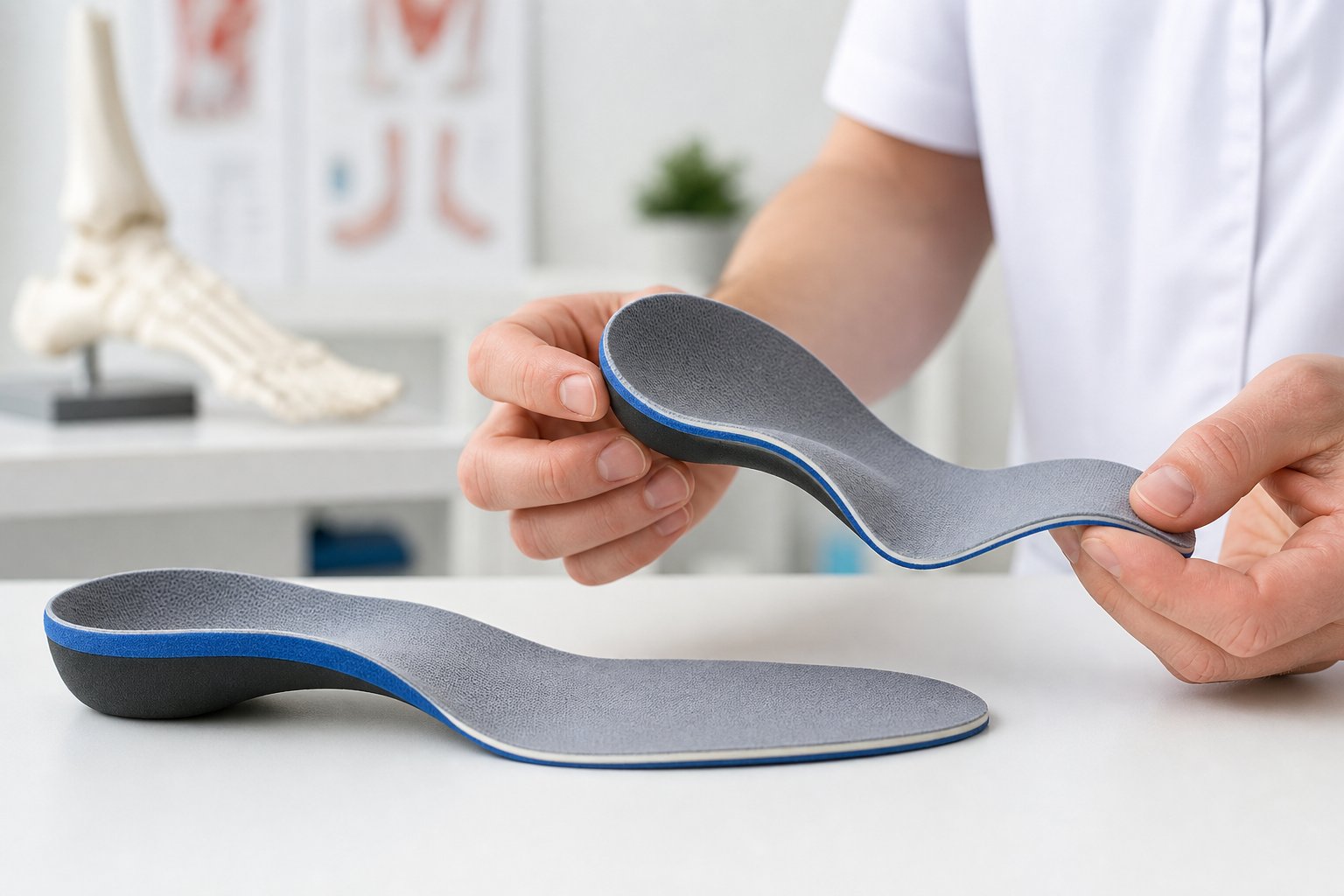
Plantar fasciitis is one of the most common causes of heel pain, and if you have ever felt that sharp, stabbing sensation under your heel first thing in the morning, you already know how disruptive it can be. The condition develops when the thick band of tissue on the bottom of your foot becomes irritated, inflamed, or damaged from repetitive strain. It can limit how you walk, how long you stand, and how much you enjoy the activities that matter to you.
Custom orthotics for plantar fasciitis work by keeping your feet in proper alignment, redistributing pressure away from the inflamed tissue, and reducing the mechanical stress that drives the pain in the first place.
Unlike generic insoles, a truly custom orthotic is designed from a precise scan of your foot and built to match your unique structure, gait, and daily demands.
At Complete Foot Care Clinic in London, Ontario, that process begins with a thorough assessment by Lisa Van Brenk, a foot care specialist with more than 25 years of experience in nursing, pedorthics, and lower-limb care. The orthotics are crafted right in the clinic rather than ordered from a distant lab, which means your device reflects your feet and your lifestyle. If persistent heel pain or foot pain has been holding you back, keep reading to learn how a proper assessment could be your first step toward relief.
What Plantar Fasciitis Is And Why It Hurts
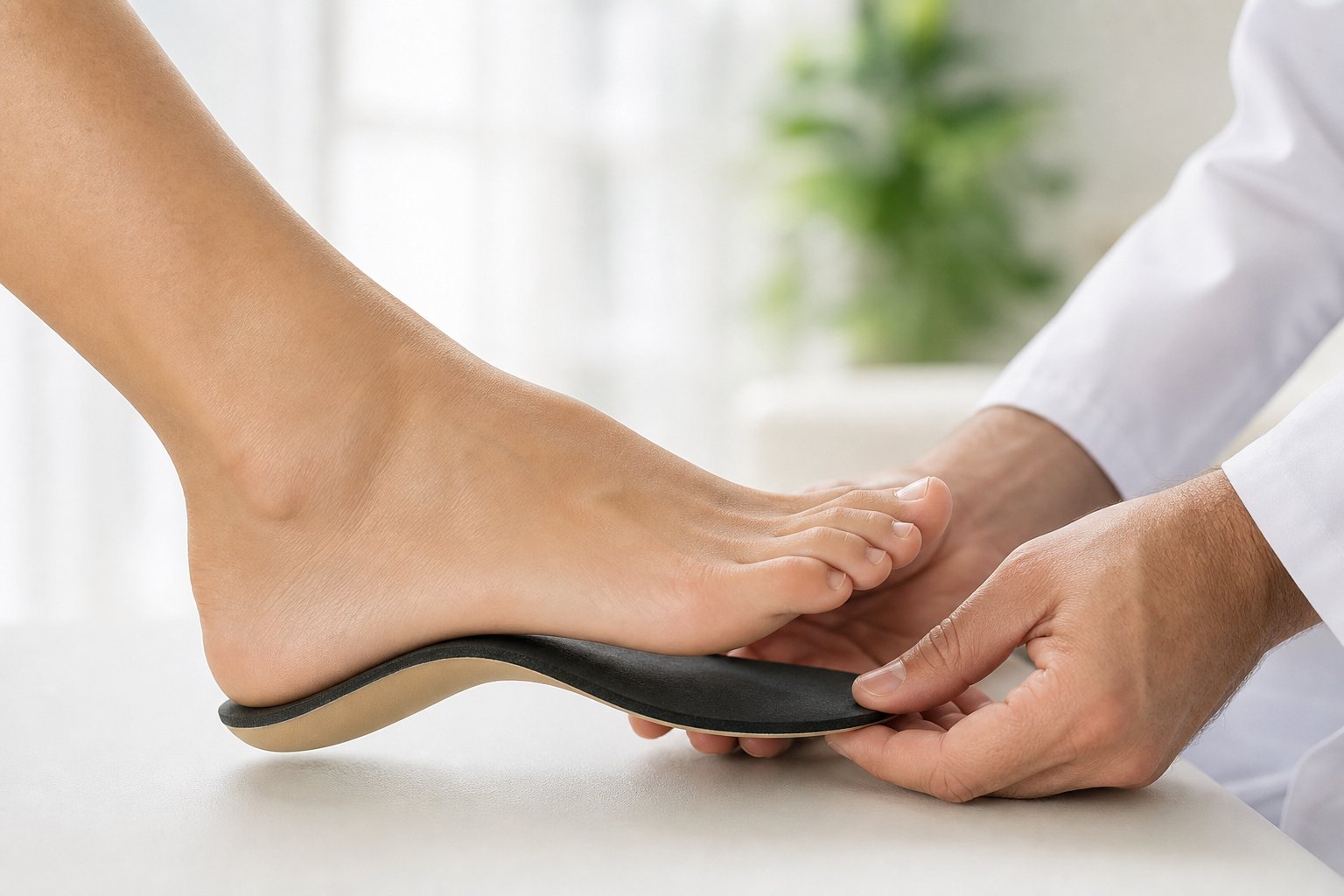
Plantar fasciitis develops when the plantar fascia sustains microtears or becomes chronically irritated, producing heel pain that can range from a dull ache to a sharp, searing sensation with every step. The condition is closely tied to how your foot absorbs impact, how your arch functions under load, and whether your footwear provides adequate support.
How The Plantar Fascia Supports The Foot
The plantar fascia is a strong, fibrous band of connective tissue that runs along the sole of your foot from the heel bone to the base of your toes. It acts like a bowstring, maintaining the arch and absorbing shock each time your foot strikes the ground.
When this tissue is healthy, it flexes and rebounds with every stride. When it is overloaded by repetitive impact, excessive pronation, sudden increases in activity, or unsupportive shoes, small tears accumulate faster than the body can repair them. That is when inflammation sets in and pain begins.
Why Morning Heel Pain Is So Common
If your first few steps out of bed feel like you are walking on a bruise, that pattern is characteristic of plantar fasciitis. During sleep, your foot relaxes into a pointed position, allowing the plantar fascia to contract and shorten.
The moment you place weight on it, those shortened fibers are forced to stretch rapidly. The result is a burst of sharp heel pain that may ease after a few minutes of walking as the tissue warms up. A similar spike often follows any prolonged period of sitting or standing still.
Signs The Pain May Be Linked To Plantar Fasciitis
Not all foot pain points to plantar fasciitis. A few hallmarks help distinguish it:
- Pain concentrated at the underside of your heel, often near the front edge of the heel bone
- Discomfort that is worst with the first steps of the day and improves with gentle movement
- Increased pain after long periods on your feet, not typically during exercise but afterward
- Tenderness when you press firmly into the inner heel area
If heel pain persists for more than a couple of weeks or begins to alter how you walk, a professional foot assessment can rule out other causes such as heel spurs, nerve entrapment, or stress fractures.
How Orthotics Reduce Strain With Every Step
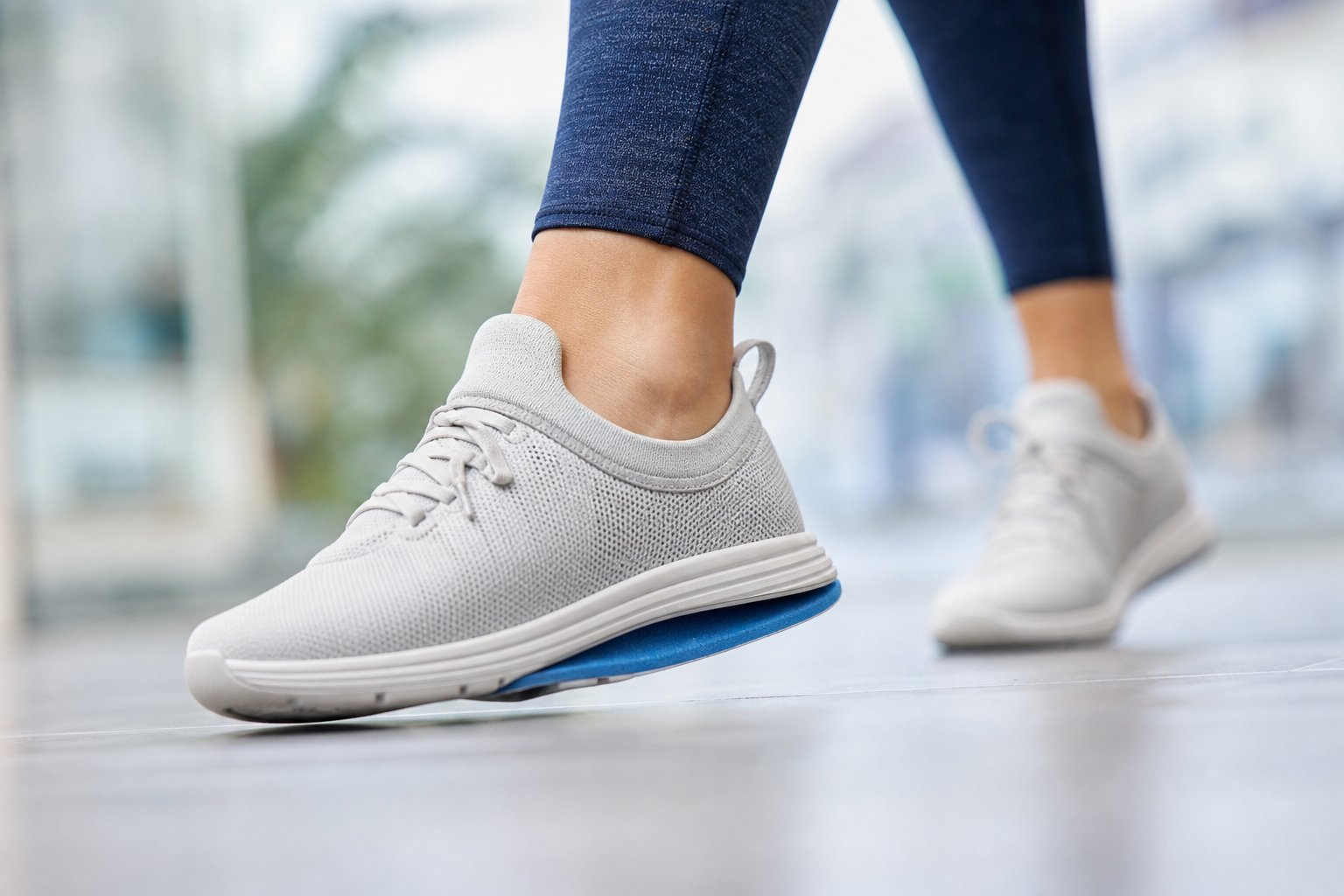
Custom orthotics address plantar fasciitis at the mechanical level by changing how force travels through your foot during walking, standing, and running. A well-designed device combines arch support, a contoured heel cup, and strategic material placement to offload the plantar fascia and let it heal.
Improving Alignment And Foot Mechanics
When your foot rolls inward too far (overpronation) or collapses through the midfoot, the plantar fascia is forced to stretch beyond its comfortable range with each step. Custom orthotics correct these biomechanical imbalances by guiding the foot through a more neutral path of motion.
That correction is subtle. You will not feel like your foot is locked in place. Instead, the orthotic provides a gentle boundary that prevents excessive movement while still allowing natural flex. Over time, this improved alignment reduces repetitive strain not only on the plantar fascia but also on your ankles, knees, and hips.
Supporting The Arch Without Overcorrecting
One of the most common mistakes with generic arch supports is that they push the arch too aggressively or not enough. A custom orthotic is shaped from a scan of your foot, so the arch contour mirrors your actual anatomy.
This matters because an arch that is overcorrected can create new pressure points and discomfort along the outer edge of the foot. An arch that is undercorrected simply fails to relieve strain on the plantar fascia. The goal is precise, individualized support that holds the arch at its natural height while absorbing shock during the loading phase of your gait.
Redistributing Pressure Through The Heel And Midfoot
A deep, structured heel cup cradles the fat pad of your heel and keeps it centered beneath the calcaneus, the bone where the plantar fascia inserts. This redistributes weight more evenly across the foot and reduces the peak pressure that triggers pain at the attachment point.
Material selection also plays a role. Firmer materials in the midfoot provide structural control, while softer cushioning layers in the heel and forefoot absorb impact. When these elements are matched to your weight, activity level, and foot type, the result is a device that reduces strain with every single step.
When Custom Support May Be Better Than Store-Bought Insoles
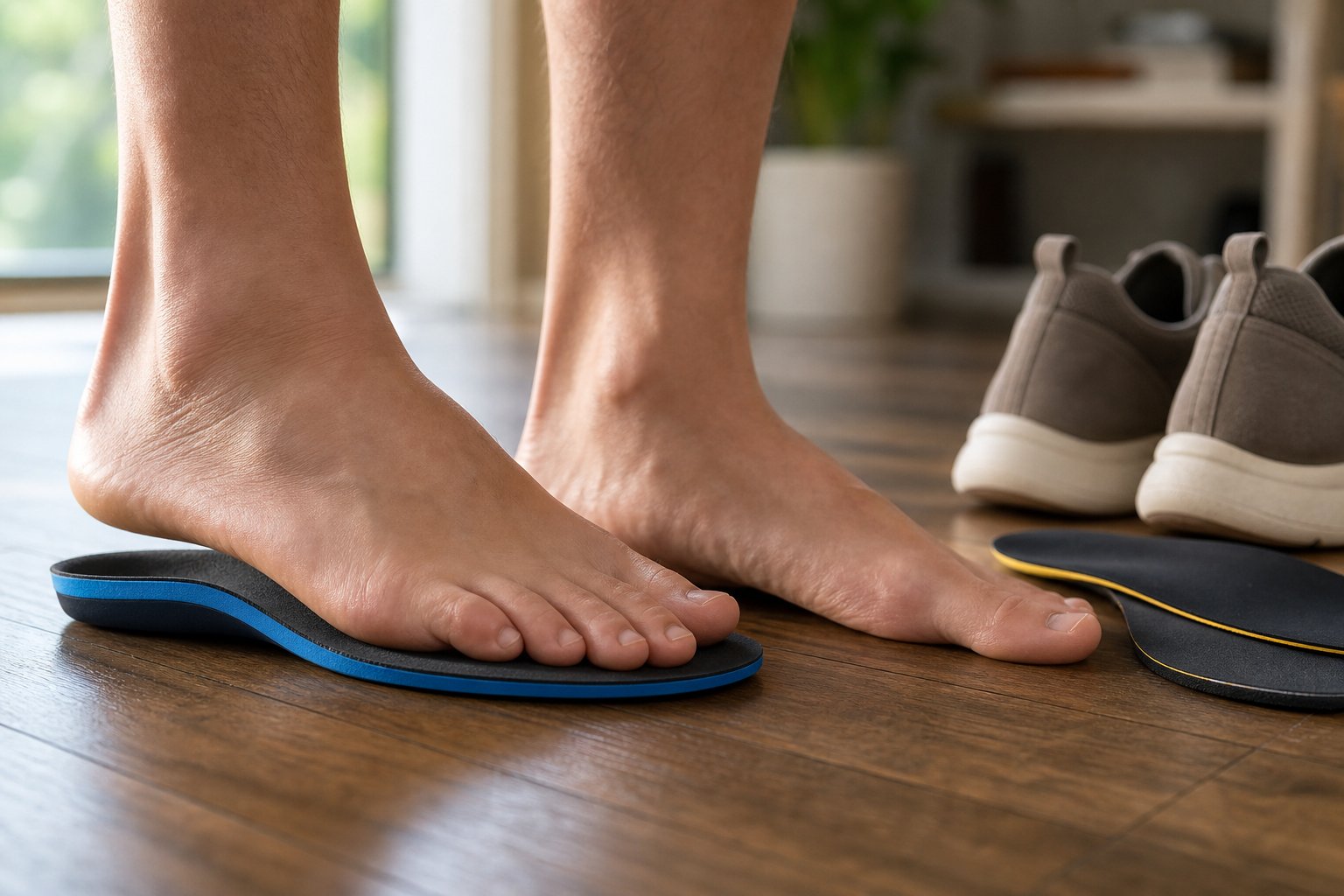
Store-bought insoles and custom orthotics serve different purposes. The key distinction is whether the device is designed around a generic foot shape or built specifically for yours, which determines how effectively it can address the mechanical causes of your plantar fasciitis.
Why Over-The-Counter Insoles Sometimes Fall Short
Over-the-counter insoles are mass-produced in standard sizes and arch profiles. They can add cushioning and provide mild support, which may be enough for occasional discomfort or minor fatigue.
For plantar fasciitis, though, cushioning alone rarely solves the problem. If your foot mechanics are contributing to the strain on your plantar fascia, a generic insole cannot correct the specific alignment issues driving your pain. The arch height may not match yours, the heel cup may be too shallow to stabilize your heel, and the materials may compress quickly under daily use.
Who May Need A More Individualized Device
Custom orthotics for plantar fasciitis tend to be most valuable when:
- Your heel pain has lasted more than a few weeks despite rest and stretching
- You have flat feet, high arches, or noticeable overpronation
- Store-bought insoles have provided only temporary or partial relief
- Your job or lifestyle demands long hours on your feet
- You have additional conditions such as bunions, diabetic foot concerns, or knee and hip pain linked to foot mechanics
In these situations, a device built from a precise scan of your foot offers the targeted correction and durability that prefabricated products cannot replicate.
What To Expect From Long-Term Support
A well-made custom orthotic is a long-term investment. Most devices last several years before the materials begin to lose their supportive properties. During that time, they continue to hold your foot in proper alignment and protect the plantar fascia during daily activity.
Many patients notice meaningful improvement within several weeks of consistent wear, though full recovery from plantar fasciitis may take three to six months when combined with stretching, appropriate footwear, and activity modification. The orthotic does not replace those steps; it supports them.
The Foot Assessment Behind A Better Fit
The effectiveness of custom orthotics for plantar fasciitis depends almost entirely on the quality of the assessment that precedes them. A thorough evaluation examines your symptoms, your movement patterns, and the real-world demands you place on your feet every day.
Reviewing Symptoms, Activity, And Footwear
Your assessment begins with a detailed conversation about where the pain started, how long it has been present, and what makes it better or worse. Your clinician will ask about your activity level, the surfaces you walk or stand on, and the types of shoes you wear most often.
Footwear tells a lot. Worn-out shoes, unsupportive flats, or boots with rigid soles can all contribute to plantar fascia strain. By examining the wear patterns on your current shoes, a skilled clinician can spot signs of pronation, supination, or uneven loading before you even take a step.
Checking Gait, Arch Function, And Overpronation
A gait analysis reveals how your foot moves through each phase of walking. Your clinician watches for excessive pronation, delayed heel lift, arch collapse under load, and asymmetry between your left and right sides.
A comprehensive biomechanical assessment also evaluates the range of motion in your ankle, subtalar joint, and forefoot. If flat feet or limited ankle mobility are contributing to the tension on your plantar fascia, those findings directly shape the orthotic prescription. Without this step, even a custom device risks missing the underlying cause.
Matching Recommendations To Real-World Daily Use
The best orthotic in the world will not help if it does not fit into the shoes you actually wear. That is why a thorough assessment includes a discussion of your daily routine, occupation, and recreational activities.
If you spend your workday in steel-toed boots, the orthotic needs to fit within that footbed. If you run three mornings a week, the device must accommodate the higher impact forces of running. This practical matching step, which includes evaluating gait, feet, and footwear together, ensures the orthotic works in your life and not just in theory.
What Makes Complete Foot Care Clinic Different
Finding the right provider for custom orthotics for plantar fasciitis means looking beyond the device itself. The clinic’s approach to assessment, fabrication, and ongoing support determines whether you get a product that truly addresses your foot health or one that simply fills your shoe.
Truly Custom Orthotics Made In The London Clinic
Complete Foot Care Clinic designs and builds its orthotics in-house at its London, Ontario location. Your feet are precisely scanned, and the device is fabricated on-site rather than sent to an outside lab. This in-clinic process allows for hands-on quality control and faster adjustments if something needs fine-tuning after your first fitting.
The distinction matters. Truly custom orthotics are shaped to the exact contours of your feet and matched to your biomechanics, not pulled from a library of prefabricated shapes. That level of precision is what separates meaningful foot support from a generic insert with a custom label.
Lisa Van Brenk’s Nursing And Pedorthic Perspective
Lisa Van Brenk brings a rare combination of credentials to the assessment table. With a background in human kinetics, registered nursing, and certified pedorthics, she evaluates your feet through both a clinical health lens and a biomechanical one.
That dual perspective is especially valuable for patients managing plantar fasciitis alongside other concerns such as diabetes, circulatory issues, or lower-limb joint pain. Her more than 25 years of hands-on experience mean she has seen a wide range of foot presentations and knows how to match the orthotic prescription to the person, not just the diagnosis.
Local Care For Ongoing Mobility And Comfort
Because Complete Foot Care Clinic is based right in London, Ontario, follow-up visits for adjustments, reassessments, or complementary services like nursing foot care and compression stockings are convenient. Foot health is not a one-appointment endeavor. Having a local clinic that knows your history, has your scan on file, and can respond quickly when something changes makes a meaningful difference in long-term outcomes.
Getting Started With Care In London, Ontario
Taking the first step toward addressing persistent heel pain does not need to be complicated. Knowing when to seek help, what paperwork you may need, and what the appointment involves can make the process feel straightforward.
When To Book An Assessment For Persistent Heel Pain
If your heel pain has lasted more than two to three weeks, worsens over time, or changes the way you walk, it is worth booking a foot assessment. Waiting too long can allow compensatory patterns to develop in your knees, hips, and lower back.
Early evaluation is also important if you have tried stretching, icing, and over-the-counter insoles without lasting relief. A professional assessment can identify whether custom orthotics, footwear changes, or other interventions are the right path forward.
Referral Notes For Orthotics
Complete Foot Care Clinic requires a referral for orthotics and compression stockings. If you have extended health benefits through a provider such as Green Shield or Sun Life, check your plan to confirm coverage for custom orthotics and whether a referral from a physician or other healthcare provider is needed.
Obtaining the referral before your appointment ensures the process moves smoothly. Your family doctor or specialist can typically provide one during a regular visit.
What Patients Can Expect At Their Appointment
Your first visit begins with a detailed conversation about your symptoms, daily activities, and footwear. Lisa Van Brenk then performs a hands-on assessment of your gait, arch function, and foot mechanics to identify what is contributing to your pain.
If custom orthotics are recommended, a precise scan of your feet is taken. Because the orthotics are made in the London clinic, turnaround is efficient. Patients consistently describe the experience as thorough, unhurried, and focused on finding solutions rather than selling products.
Frequently Asked Questions
Do prescription orthotics work better than over-the-counter inserts for heel pain?
For persistent plantar fasciitis, custom orthotics typically outperform over-the-counter inserts because they are built from a scan of your individual foot and designed to correct your specific biomechanical issues. Generic insoles provide cushioning but lack the structural correction needed to address the root cause of heel pain. If your pain is mild and recent, a store-bought insole may offer temporary comfort, but chronic or recurring heel pain usually benefits from a custom approach.
How long does it take to feel relief after starting to wear orthotics?
Most patients begin noticing improvement within a few weeks of consistent daily wear, though it can take time for your feet and body to adjust to the new alignment. Full recovery from plantar fasciitis often takes three to six months when orthotics are combined with stretching, proper footwear, and activity modification. Wearing the orthotics consistently, rather than only on days when pain flares, gives the plantar fascia the best chance to heal.
What features should orthotics have to support the arch and reduce strain on the foot?
Effective plantar fasciitis orthotics include a contoured arch that matches your foot’s natural height, a deep heel cup to stabilize the heel and center the fat pad, and appropriate material density to control motion without overcorrecting. The combination of support and pressure redistribution offloads the plantar fascia during each phase of your gait. These features should be tailored to your foot structure and activity level for the best results.
Can orthotics be worn in different types of shoes, including work boots and running shoes?
Yes, custom orthotics can be designed to fit a range of footwear, including running shoes, work boots, dress shoes, and casual shoes. During your assessment, your clinician should ask about the types of shoes you wear most often so the orthotic profile matches those footbeds. Some patients choose to have more than one pair to accommodate different shoe styles without compromising support.
How do I know if my foot pain is caused by plantar fasciitis or something else?
Plantar fasciitis typically produces pain on the underside of the heel that is worst with the first steps of the morning and after periods of rest. If your pain is located elsewhere, occurs during activity rather than after, or is accompanied by swelling, numbness, or skin changes, another condition such as a stress fracture, nerve issue, or heel spur may be involved. A professional foot assessment that includes gait analysis and a physical examination can pinpoint the cause and guide the right treatment.
How long do orthotics typically last, and when should they be replaced?
Custom orthotics generally last between three and five years, depending on the materials used, your body weight, and how actively you wear them. Signs that replacement may be needed include visible wear on the top cover, reduced cushioning in the heel area, or a return of symptoms that had previously improved. Regular check-ins with your clinician can help determine when a refurbishment or a new device is warranted.